
FINWIRES · TerminalLIVE
FINWIRES

April Home Price Growth Accelerates Annually But Remains Constrained Amid Inflation, S&P Says

By
April Home Price Growth Accelerates Annually But Remains Constrained Amid Inflation, S&P Says

US home price growth accelerated annually in April, though the value of homes continued to deteriorate in real terms as high inflation outpaced price gains, S&P Global (SPGI) division S&P Dow Jones Indices said Tuesday.

The national S&P Cotality Case-Shiller Index rose 0.8% year over year in April without seasonal adjustments, up from a 0.7% increase the month prior. The 10- and 20-city composites advanced 1.8% and 1.1%, respectively. Those measures accelerated from March's growth rates of 1.5% and 0.9%, respectively, according to the report.

"April's figures confirm that US home prices remain essentially flat," said Nicholas Godec, head of fixed income tradables and commodities at S&P Dow Jones Indices. "With inflation accelerating to 3.8% in April, US home values have now declined in real terms for an 11th straight month, further eroding inflation-adjusted housing wealth."

Markets in the Midwest and Northeast are "still leading moderate growth" in home prices, while much of the Sun Belt and Western regions continue to see declines, according to Godec.

Among the 20 cities, Chicago logged the highest annual price gain of 6.5% in April, followed by New York and Cleveland. Prices in Seattle fell 2.3%, the steepest decline, the data showed.

Sequentially, pre-seasonally adjusted national home prices increased 0.8% in April, compared with a 0.7% rise the month prior. The 10-city composite index was up 1.1%, while the 20-city composite increased 1%, the data showed. In March, the 10- and 20-city composites advanced 1.2% and 1.1%, respectively, according to the report.

"Monthly price movements show seasonal strength masking underlying softness," Godec said. "After dipping below 6% earlier this year, 30-year mortgage rates climbed back to 6.3% in April, keeping financing costs elevated."

Home price growth continues to be constrained in a higher rate environment, with housing mainly "treading water in nominal terms and falling in real terms," Godec added.

Separately, the Federal Housing Finance Agency said US home prices decreased 0.1% sequentially in April, following a 0.2% rise the month before, which was the consensus in a Bloomberg-compiled survey. Annually, prices increased 2% in April, the FHFA said.

Earlier this month, a survey by Redfin showed that US home prices increased 0.3% in May on a seasonally adjusted basis, the fastest monthly gain since January.

Price: $406.21, Change: $-2.35, Percent Change: -0.58%
Related Articles

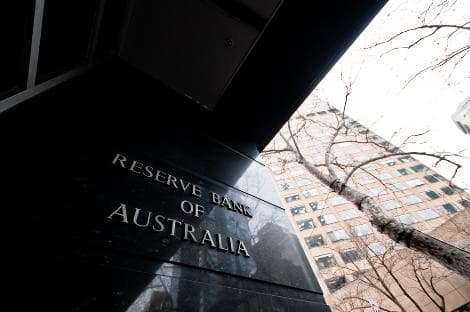
Australia's Central Bank Ready to Raise Rates if Needed After June's Hold Decision
US Markets

Australia's Central Bank Ready to Raise Rates if Needed After June's Hold Decision

Australia's central bank said it is willing to take necessary steps to achieve price stability and full employment, including increasing the cash rate target.The Reserve Bank of Australia decided to leave interest rates unchanged at its June meeting, given the ongoing uncertainty related to developments in the Middle East.Minutes released from the June monetary policy showed that board members believed a durable US-Iran resolution could limit costs passed on to consumers by firms, but noted that underlying inflation would still show lingering effects of the recent fuel shock.The Reserve Bank of Australia's monetary policy board members decided to hold rates at 4.35% to balance its inflation and employment targets.Members agreed policy needed to stay restrictive to unwind excess demand through below-trend growth, with inflation remaining well above target and staff's May forecasts pointing to a further two years before it returns to target on a sustainable basis.The board members believe it would take considerable time to restore oil supply to pre-conflict levels even if the current resolution proves enduring, and noted demand could be buoyed for a time as countries look to rebuild inventories.The minutes were described as "hawkish" by ANZ, which continues to expect the interest rate to remain at 4.35% for the next year.Amid a developing Middle East peace resolution, reduced fuel costs, and a decreased May unemployment rate, Australian consumers are showing optimism as ANZ's consumer confidence survey showed a second consecutive weekly rise in June.The RBA is scheduled to meet again in August, while the ASX Rate Indicator showed 81% market expectations of another hold decision.

ASX 200
Japan's Jobless Rate Steadies in May; Job Availability Ratio Unexpectedly Shrinks
US Markets

Japan's Jobless Rate Steadies in May; Job Availability Ratio Unexpectedly Shrinks

Japan's unemployment rate held steady as expected in May, while a gauge of labor market tightness eased, defying market expectations.The seasonally adjusted unemployment rate remained unchanged at 2.5% in May, matching the consensus forecast tracked by Investing.com.The total number of unemployed persons grew by 20,000 to 1.85 million year over year, while the number of employed persons expanded by 520,000 to 68.9 million, according to data from the Ministry of Internal Affairs and Communications on Tuesday.A separate release from the Ministry of Health, Labour and Welfare showed a softer picture, with the active jobs-to-applications ratio falling to 1.17 from 1.18 in the prior month.The figure indicates that there were 117 available job openings for every 100 job seekers across the country.The reading missed the consensus forecast of 1.18 tracked by Investing.com.Meanwhile, the new jobs-to-applications ratio steadied at 2.11.Effective job openings rose 0.3% month over month on a seasonally adjusted basis, easing from the 0.4% increase in April. Effective job seekers edged up 0.7%, also softer than the 0.8% gain the previous month.New job openings contracted 8.9% year over year in May, faster than the 3.6% slump in April. The sharper decrease in new job vacancies was due to a double-digit drop in openings across lifestyle-related services and entertainment, wholesale and retail trade, accommodation and food service industries, as well as construction.The effective job-to-applicant ratio for regular employees, which excludes part-time workers, held steady at 0.99.The labor data arrived less than two weeks after Japan reported higher inflation figures for May.The nationwide core consumer price index (CPI), which strips out volatile fresh food prices and is the BOJ's preferred inflation gauge, rose 1.4% year over year in May, unchanged from April's reading.Japan's headline CPI climbed 1.5% year over year in May, faster than the 1.4% increase in April, but missing the Trading Economics forecast of 1.6%.Real wages in Japan, meanwhile, climbed 1.9% year over year in April, according to recent government data.The Bank of Japan recently raised its policy rate by 25 basis points to 1.0%, the highest level since 1995.BOJ board member Naoki Tamura, speaking to business leaders in Hyogo last week, noted that the employment conditions diffusion index in the BOJ's Tankan survey, which captures companies' perceptions over labor shortages, had tightened further in recent quarters, with the all-industries reading at -38 as of March 2026."As a result of such labor shortages, firms may be unable to operate production facilities as they wish to, leading to a decline in capacity utilization rates," Naoki Tamura said.In April, Japan's capacity utilization index fell 0.8% month over month, softer than the 1.2% drop the previous month, according to Ministry of Economy, Trade and Industry data earlier this month.

Nikkei 225
Update: Dow Posts New High to Kick Off Holiday-Shortened Trading Week
US Markets

Update: Dow Posts New High to Kick Off Holiday-Shortened Trading Week

(Updates with market moves at the end of the day.)The Dow Jones Industrial Average hit a fresh all-time high at the start of what will be a short trading week.The Dow rose 0.6% to settle at 52,182.7 on Monday, closing above 52,000 for the first time. The Nasdaq Composite advanced 2.1% to 25,820.1, while the S&P 500 climbed 1.2% to 7,440.3, with both indexes rebounding after a five-day losing streak. Among sectors, communication services paced the gainers, while materials saw the sharpest drop.The New York Stock Exchange and Nasdaq will be closed on Friday in observance of the Independence Day holiday, which falls on a Saturday this year.Iran said that no talks were scheduled with the US in the coming days, despite President Donald Trump saying Washington will meet with Tehran in Qatar on Tuesday, CNN reported.Both sides engaged in attacks in and around the Strait of Hormuz.West Texas Intermediate crude oil was up 1.8% at $70.45 a barrel in Monday late-afternoon trade, while Brent advanced 1.1% to $72.78.US Treasury yields were higher, with the two-year rate up 1.1 basis points at 4.11% and the 10-year rate rising 0.7 basis points to 4.38%.In company news, Alphabet's (GOOGL) class A shares jumped 4.8%, the top gainer on the Dow, as the Google parent joined the index, replacing Verizon Communications (VZ), which fell 5.2%.Alphabet's class C shares (GOOG) rose 5%.Comcast (CMCSA) said it plans to split into two publicly traded companies, separating its NBCUniversal and Sky media businesses from its broadband and connectivity operations. Comcast shares advanced 4.5%.Honeywell International (HON) shares fell 6.4%, the worst performer on the Dow and third-biggest drop on the S&P 500. The company completed the spinoff of its aerospace business into an independent publicly traded company.Martin Marietta Materials (MLM) agreed to combine with limestone supplier Lhoist North America in a $13.5 billion deal. Shares of the American building materials supplier slumped 5.7%, among the steepest declines on the S&P 500.Nike (NKE), Constellation Brands (STZ) and General Mills (GIS) are expected to release their latest financial results this week.Gold was down 1.7% at $4,028.80 per troy ounce, while silver dropped 1% to $58.66 per ounce.

Dow JonesNasdaq CompositeS&P 500$CMCSA$GIS$GOOG$GOOGL$HON$MLM$NKE$STZ