FINWIRES · TerminalLIVE
FINWIRES

Subaru's Profit Drops 73% in 2026 Fiscal Year Over US Tariff Hit

By
Subaru's Profit Drops 73% in 2026 Fiscal Year Over US Tariff Hit

Subaru's (TYO:7270) profit dipped in the 2026 fiscal year after feeling the brunt of the U.S. tariff hikes.

The profit attributable to owners dropped 73% to 90.8 billion Japanese yen from 338.1 billion yen, with earnings per share falling year on year to 125.49 yen from 458 yen.

The company attributed the decline to the impact of the additional U.S. tariffs in 2025, as well as other external factors such as the Middle East war.

Subaru was among the Japanese automobile manufacturers that were negatively hit by the U.S. tariff hikes in 2025. A Nikkei Asia report in February showed that the tariffs wiped out about 2.1 trillion yen of domestic carmakers' operating income between April 2025 and December 2025, which constitutes about 30% of their operating profit.

Subaru's operating profit a year earlier slumped 82% to 66.2 billion yen due to tariff-related costs of 216.6 billion yen, the report said.

The U.S. tariffs on Japanese car imports jumped 27.5% in April and were reduced to 15% in September, according to the media outlet.

Meanwhile, Subaru's revenue for the fiscal year ending March 31 rose 2.1% to 4.785 trillion yen from 4.686 trillion yen in the previous year due to improvements in price and mixture, offsetting the negative impact of lower unit sales and the 2-year appreciation of the yen against the U.S. dollar, the company said in its earnings report.

The temporary shutdown of a production line and shipping delays caused by the Iran conflict brought down net sales by 8.5% to 2.495 trillion yen from 2.726 trillion yen in the previous year. The group's domestic unit sales were nearly flat, sliding 1.4% to 103,000 units. Overseas unit sales also declined by 4.7% to 793,000 units.

The board of directors announced to pay out a dividend worth 58.50 yen per share, lower than the previous fiscal year's dividend of 67 yen per share.

Despite weakened profit and sales, Subaru is confident it will maintain a strong performance amid uncertainties brought by the Middle East conflict.

For the 2027 fiscal year, the group forecasted that its attributable profit will rebound, jumping 43% year on year to 130 billion yen, with an EPS of 179.59 yen. Revenue is expected to rise 8.7% to 5.200 trillion yen from a year earlier.

"The group will further enhance flexibility in mixed-model production, while strengthening adjustments to production and sales across markets," Subaru said in its earnings report. "Through these efforts, the group aims to maintain steady sales in the increasingly competitive U.S. market, while steadily expanding unit sales in global markets, including Japan and Canada."

The company plans to repurchase up to 80 million shares, which represents 11.2% of the company's outstanding shares, for 150 billion yen.

The share buyback will be implemented from May 18 this year to March 16, 2027.

Related Articles

China's Credit Growth Weakens in April
US Markets

China's Credit Growth Weakens in April

China's credit growth slowed down in April, with new loans missing expectations as the private sector demand and household loans remained weak.Renminbi-denominated loans rose 8.59 trillion yuan in the first four months of the year, according to the People's Bank of China on Friday.The new loans missed market expectations of 8.90 billion yuan and is lower than the previous month's 8.60 trillion yuan.The drop in new loans by 10 billion yuan was mainly attributed to weaker loans in both the corporate and household sectors."New loans in the corporate sector may appear adequate on the surface, as they exceeded year earlier levels, but this was primarily attributable to a substantial volume of bill financing, which is not a genuine indicator of corporate credit demand," economists from Nomura said.Under new loans, household loans dropped 490.2 billion yuan during the period between January and April, while loans to enterprises and institutions climbed 8.99 trillion yuan, and loans to non-bank financial institutions fell 193.5 billion yuan.The downturn in household loans was a surprise to some analysts, especially that home prices in first-tier Chinese cities rose for the first time in March after nine months."This contradicts our observation that new home sales in 30 major cities rose 3.4% y/y at the same time," Zhaopeng Xing, ANZ's senior China strategist, said. "It may be explained by mortgage pre-repayments by households, due the low confidence in property.""Notably, the relatively better housing market performance in major cities has yet to translate into a turnaround in household loan demand nationwide," analysts from Bank of America said in a note.Meanwhile, total aggregate financing was 15.5 trillion yuan in the first four months of the year, 893 billion yuan less than the same period a year earlier. The market predicted a total aggregate financing of 16.1 trillion yuan.Nomura's analysts said the aggregate financing declined to 7.8% year on year from 7.9% in March due to lower renminbi-denominated loans and government bond issuances.The outstanding aggregate financing grew 7.8% year on year to 456.89 trillion yuan at the end of April.Moreover, China's broad money supply, or M2, rose 8.6% year on year to 353 trillion yuan in April, while the narrow money supply, or M1, increased 5% to 114.6 trillion yuan, according to the Chinese central bank.Market consensus expected an 8.5% growth for M2 and a 5.2% increase for M1.Despite the slowdown, analysts expect some improvement in China's credit in the coming month."Looking ahead, we see investment stabilization as key to sustaining credit growth. With the April Politburo meeting signaling further government support for infrastructure investment, we remain hopeful that credit demand will start to stabilize in the coming months," BofA analysts said."There should be a floor to credit growth. We expect the authorities will tolerate a slowing pace of credit growth, but they are prepared to inject liquidity this year," Xing said. "

$^SSEC$^SZSE
Japan Producer Prices Surge as Iran Conflict Drives Up Fuel Costs
US Markets

Japan Producer Prices Surge as Iran Conflict Drives Up Fuel Costs

Japan's wholesale prices rose at their fastest annual pace in nearly three years in April as the Iran conflict drove up fuel and chemical costs, government data showed Friday, reinforcing expectations the Bank of Japan could raise interest rates as soon as June.The corporate goods price index, which tracks the prices companies charge each other for goods and services, rose 4.9% from a year earlier. The figure marked a sharp acceleration from 2.9% in March and came in above market expectations.On a monthly basis, producer prices increased 2.3%, reflecting broad gains across energy categories including petroleum, electricity and chemicals.The latest reading adds to signs that external shocks are feeding through Japan's import-dependent economy. The yen-based import price index jumped 17.5% from a year earlier, its fastest rise since late 2022, as higher crude oil prices and a weaker currency lifted costs for firms.Energy-related items were a key driver of the monthly rise. Petroleum and coal products contributed 0.75 percentage points, while electric power, gas and water added 0.47 percentage points. Chemical-related goods also added 0.48 percentage points, reflecting higher prices for inputs such as ethylene, propylene and xylene.Export and import prices also pointed to broad cost pressures. The export price index rose 3.3% from a month earlier, led by other primary products and manufactured goods, which contributed 1.48 percentage points, and chemicals and related products, which added 1.11 percentage points.The import price index increased 4.9% on the month, with petroleum, coal and natural gas contributing 4.19 percentage points, making it the dominant driver of the rise. Electric and electronic products added 0.32 percentage points, while chemicals and related products contributed 0.15 percentage points.The inflation data has sharpened attention on the Bank of Japan's policy path after board member Kazuyuki Masu said recently that rates should be raised as early as possible if there are no clear signs of economic slowdown. His comments added to growing market bets that the central bank could move again as soon as June.Three BOJ board members had already dissented at the previous policy meeting, pushing for a rate increase, underscoring the split within the central bank over the pace of normalization.The broader concern for policymakers is whether higher energy costs remain confined to a narrow set of goods or begin to spread across a wider range of products, potentially embedding more persistent inflation in the economy.

$^N225
Foxconn's Profit Rises 19% in Q1 as AI Server Demand Drives Record Revenue
US Markets

Foxconn's Profit Rises 19% in Q1 as AI Server Demand Drives Record Revenue

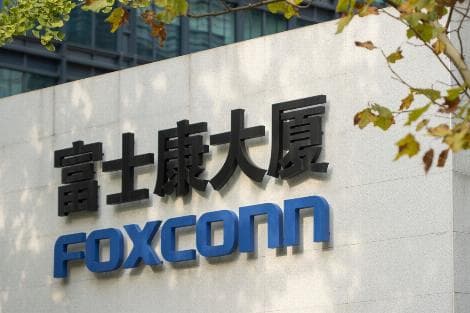
Hon Hai Precision Industry (TPE:2317), also known as Foxconn, posted higher first-quarter profit as booming artificial intelligence server demand drove record revenue.Net profit attributable to the parent company rose 19% to NT$49.9 billion in the January-to-March period, the company said Thursday.Earnings per share came in at NT$3.56 from NT$3.03 in the corresponding period last year.Revenue climbed 29% to a record NT$2.12 trillion.Nvidia's largest AI server supplier and Apple's main iPhone assembler said rapid growth in AI server demand reshaped its revenue mix, with its cloud and networking business accounting for nearly half of group revenue during the quarter.Foxconn's rotating Chief Executive, Michael Chiang, said artificial intelligence continued to underpin the company's growth outlook as major cloud service providers ramp up spending on AI infrastructure."AI remains the most important growth driver this year," Chiang said on an earnings call, according to Reuters. He added that major cloud service providers have recently increased capital spending plans."AI is not a short-term theme, but a structural transformation of the industry," Chiang said.The company forecast significant quarter-over-quarter and strong year-over-year growth in the second quarter, supported by sustained AI demand, while maintaining its full-year outlook for strong growth.Foxconn said AI rack shipments are expected to more than double this year, with quarterly shipment volumes rising sequentially as customer projects advance.The company also said shipments and revenue from high-speed switches above 800G could double this year as AI data centers increasingly adopt faster networking architectures.Capital expenditures rose about 27% year over year to NT$174 billion last year and are expected to increase by more than 30% this year as Foxconn expands regional manufacturing capacity, automation deployment, and core infrastructure.Foxconn's growing AI infrastructure ambitions come as SoftBank (TYO:9984) has reportedly begun discussions with Nvidia and Foxconn on plans to develop "made-in-Japan" artificial intelligence servers, according to a Nikkei report earlier this month.The report said SoftBank aims to establish a domestic AI server production framework by the end of the decade, initially assembling externally sourced components before eventually expanding into full-scale server manufacturing.Foxconn has also been expanding its footprint in electric vehicles, recently deepening its push into Europe through a strategic partnership with Poland's state-backed ElectroMobility Poland.

$TPE:2317$TYO:9984