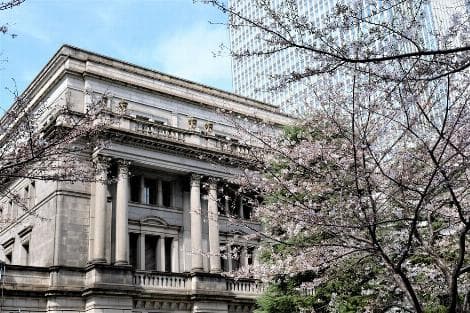
The Persian Gulf turmoils, including the closed Strait of Hormuz, in part induced Bank of Japan central bankers to a stand-pat decision at their April 27-28 policy session, according to meeting minutes released Tuesday.
At the meeting, the Bank of Japan's monetary policy board voted 6-3 to keep its short-term policy rate at 0.75%, leaving borrowing costs at their highest level since September 1995, but also unchanged since late 2025.
"It is difficult to foresee the impact of the situation in the Middle East, and the Bank needs to adopt a wait-and-see approach at this meeting," said one banker in the meeting.
In an accompanying economic forecast, the Bank of Japan boosted its fiscal 2026 (started April 1) core inflation estimate to 2.8% from 1.9%, citing likely higher crude oil prices.
At the same time, central bankers trimmed the fiscal 2026 gross domestic product (GDP) growth outlook to 0.5% from 1.0%, as higher prices cooled real consumption and investment.
Despite challenging energy and trade environment, the Bank of Japan expected the nation's overall economy to expand moderately, underpinned by government fiscal expansion, relatively low interest rates, higher wages, and resilient corporate profits.
"With high levels of profits having been accumulated in the corporate sector and expectations for wage hikes as a result of the annual spring labor-management wage negotiations, Japan's economy appears to be reasonably resilient to downward pressure," said bankers.
Notwithstanding higher oil prices, the outlook for inflation risks and scenarios remained somewhat mixed, according to meeting minutes.
Japan will still likely post inflation on its consumer price index-core (CPI-core), a metric that strips out fresh food bills, at near 2% on year in fiscal 2026, according to the bankers.
However, if "the situation (of a closed Strait of Hormuz) becomes prolonged, risks to underlying inflation will be skewed to the upside, but if it is accompanied by significant disruptions in supply chains, downward pressure is likely to be greater than upward pressure," concluded participants at the policy session.
The Bank of Japan's next policy session is slated for June 15-16.